
Buying your first home? Important things to know
By Ali Hasani, Founder and Principal Mortgage Broker at Buyvest, MFAA accredited. Last updated July 2026. Scheme figures verified against firsthomebuyers.gov.au and Revenue NSW.
This guide covers the first home buyer schemes NSW buyers can access right now, how much deposit you actually need, what stamp duty you will pay, and how the purchase process works from pre-approval to settlement. For a wider view of your choices, see our guide to pathways to home ownership.
Where things stand: The Australian Government 5% Deposit Scheme has no income caps, no limit on places, and a $1.5 million Sydney price cap. It is open to first home buyers and to anyone who has not owned property in Australia in 10 years. Single parents get in at 2%. Help to Buy is separate, with income limits of $103,000 single and $165,000 joint. In NSW, stamp duty is $0 up to $800,000, and a $10,000 grant applies to new homes under $600,000.
1. How much deposit do you need to buy a house in NSW?
First home buyers in NSW need between 2% and 20% of the property price. A 5% deposit is the most common entry point through the Australian Government 5% Deposit Scheme, which removes Lenders Mortgage Insurance.
A 20% deposit is still the cleanest way to buy. It avoids Lenders Mortgage Insurance and opens up the sharpest rates. It is no longer the only realistic path.
The Australian Government 5% Deposit Scheme gets you in at 5% with no LMI, or 2% if you are a single parent. Help to Buy also starts at 2%. Without a scheme, expect 10% to 15% with LMI.
The deposit is only part of the cash you need. Our deposit options guide covers each pathway, and the property deposit calculator converts a deposit into buying power.
Building your deposit faster
The First Home Super Saver Scheme lets you put voluntary contributions into super and release them later for a first home. Limits are $15,000 a financial year and $50,000 lifetime, plus ATO-calculated earnings. Those contributions count towards your concessional cap, now $32,500. Request your FHSS determination before you sign a contract. The released amount is taxed, so speak with your accountant first.
Other routes: a family guarantee using a parent's equity as extra security, or a gift with the right paperwork. Saving from scratch, most lenders want genuine savings over at least three months.
2. What is the Australian Government 5% Deposit Scheme?
The Australian Government 5% Deposit Scheme lets eligible buyers purchase a home with a 5% deposit and no Lenders Mortgage Insurance, because the government guarantees part of the loan for the lender. There are no income caps and no limit on places.
The Australian Government 5% Deposit Scheme, formerly the Home Guarantee Scheme or First Home Guarantee, is administered by Housing Australia. It runs in two streams: 5% for first home buyers, and 2% for single parents and single legal guardians, previously called the Family Home Guarantee.
How it works
You buy with a deposit as small as 5% and pay no Lenders Mortgage Insurance. The government does not give you money or take a share of your home. It guarantees part of the loan for the lender, which is what removes the LMI charge. You still borrow 95%, pay interest on the full balance, and carry every repayment.
The three settings that matter
No income test. Any income level, either stream, whether you buy alone or with someone else.
No limit on places and no waiting list. Every eligible applicant gets a guarantee, so there is no annual allocation to beat.
A $1,500,000 price cap for Sydney, the Illawarra, Newcastle and Lake Macquarie. The rest of regional NSW sits at $800,000. Check your postcode on the government price cap tool.
What the $1.5 million cap means in Sydney: Suburbs across the Ryde, Epping and Chatswood corridors sit within reach for first home buyers with a 5% deposit. The cap is a ceiling, not a budget. It only helps if a lender will lend you that much, so borrowing capacity is still the number that decides your price range.
Who qualifies
You need to be an Australian citizen or permanent resident, aged 18 or over, buying a home you will live in as an owner occupier. Investment properties are not eligible.
You do not have to be a first home buyer. The test is that you are a first home buyer, or you have not owned property or land in Australia in the last 10 years. That covers anyone who sold up after a separation, or moved overseas and has rented since.
You can apply alone or with one other person, and that person does not have to be a partner. A friend or family member counts. Eligible property types are broad: houses, townhouses, apartments, house and land packages, off the plan and building on vacant land.
Apply through a participating lender, not Housing Australia directly. The panel runs to dozens of lenders including all four major banks. After pre-approval you have 90 days to find a home and sign a contract.
Not sure which scheme you qualify for?
We help first home buyers across Sydney check eligibility, compare 35+ lenders, and line up pre-approval, all at $0 cost to you.
3. Which first home buyer scheme should you use?
Use the 5% Deposit Scheme if you want to own 100% of your home. Use Help to Buy if a smaller loan matters more than full ownership and your income is under the caps. You cannot use both.
Two federal schemes, with two streams inside the 5% Deposit Scheme. The key point: you cannot use the 5% Deposit Scheme and Help to Buy together. You choose one.
Help to Buy: the 2% deposit shared equity scheme
Help to Buy runs in every state and territory. The government contributes up to 40% of a new home or 30% of an existing one, taking an equity share of the same size. You need 2% deposit, pay no LMI, and pay no rent on the government's share. Borrowing less means lower repayments.
The trade-off: the government owns part of your home. You repay its share at the value when you sell, so strong growth means handing back more. You can buy the share back gradually instead.
Income limits are $103,000 single and $165,000 joint or single parent, indexed to wages each 1 July. Places are capped at 10,000 a year and the lender panel is still small, so check who is participating before planning around it. Current thresholds are published on the Help to Buy thresholds page.
The 2% deposit stream for single parents
If you are a single parent or single legal guardian of one or more dependent children, you can use the 5% Deposit Scheme with a 2% deposit instead of 5%. This stream was previously called the Family Home Guarantee. Full criteria are on the government single parents page.
Terms are otherwise identical to the main stream: no income caps, no waiting list, no LMI, same $1,500,000 Sydney cap. Single means no spouse or de facto partner, and separated but not divorced does not count. You need not be a first home buyer, but you must hold no other property interest once your home settles. One difference: applications are solo only.
Side by side
| 5% Deposit Scheme | 5% Scheme, single parents | Help to Buy | |
|---|---|---|---|
| Minimum deposit | 5% | 2% | 2% |
| Who it is for | First home buyers, or anyone who has not owned property or land in Australia in 10 years | Single parents and single legal guardians with a dependent child | Buyers who do not currently own property |
| Income limits | None | None | $103,000 single, $165,000 joint or single parent |
| Places available | Unlimited, no waiting list | Unlimited, no waiting list | 10,000 per financial year |
| Does the government take a share? | No | No | Yes, up to 40% new or 30% existing |
| LMI payable | No | No | No |
| Sydney price cap | $1,500,000 | $1,500,000 | Lower than the 5% scheme, around $1.3m |
| Joint applications | You plus one other person, including a friend or family member | Apply on your own only | Check with a participating lender |
| Lender choice | Wide, includes all major banks | Wide, includes all major banks | Limited panel, expanding |
Figures current at July 2026. Price caps and income limits are reviewed and can change, so confirm current settings before you rely on them.
4. How much stamp duty do first home buyers pay in NSW?
Eligible first home buyers in NSW pay $0 stamp duty on a home up to $800,000. Between $800,001 and $1,000,000 a reduced rate applies. Above $1,000,000 there is no relief.
The federal schemes deal with your deposit. The NSW schemes deal with your upfront costs, and they can be used alongside the federal ones.
Stamp duty exemption for first home buyers in NSW
The First Home Buyers Assistance Scheme gives eligible first home buyers a full exemption from transfer duty on a new or existing home valued up to $800,000. Between $800,001 and $1,000,000 a concessional rate applies, and the discount shrinks as the price climbs. At $1,000,000 or above, no relief is available at all.
For vacant land you intend to build on, the full exemption applies up to $350,000, with a concession above that and below $450,000.
On an $800,000 purchase, a buyer who is not a first home buyer would pay more than $30,000 in duty. An eligible first home buyer pays nothing. Across NSW the average saving reported by the state government is around $20,400 per buyer. Duty brackets are indexed each 1 July, so check the current figure for your price point with Revenue NSW or our NSW stamp duty guide.
There is a residence condition attached. You need to move in within 12 months of settlement and live there for at least 12 continuous months.
The $10,000 First Home Owner Grant
The NSW First Home Owner Grant is $10,000 for new homes only. Established properties do not qualify. Two value limits catch people out: a completed new home must be under $600,000, while land plus a building contract must be under $750,000 combined. You also need to be a citizen or permanent resident who has not owned property in Australia.
Stacking the benefits: a worked example
Example, a $580,000 new apartment: A 5% deposit is $29,000, and the 5% Deposit Scheme removes LMI. The price sits under $800,000, so stamp duty is $0. It is a new home under $600,000, so the $10,000 First Home Owner Grant applies. That is a $10,000 grant plus roughly $21,000 in duty saved, on top of avoiding LMI, and the buyer entered with $29,000 rather than $116,000.
Example, a $950,000 established Sydney house: A 5% deposit is $47,500, well under the $1.5 million cap, so LMI is still removed. No First Home Owner Grant, because the home is established. Some stamp duty is payable at the concessional rate, but less than a general buyer pays. This is the typical middle ring Sydney picture.
5. How much can you borrow as a first home buyer?
Borrowing capacity is set by your income, expenses and existing debts, not by the scheme you use. A lender confirms the figure at pre-approval, which takes one to two weeks and lasts three to six months.
Schemes set what you are allowed to buy. Borrowing capacity sets what you can actually buy. The gap between them is where most disappointment happens.
Getting pre-approved
Pre-approval is a lender reviewing your income, expenses and commitments, then indicating what it will lend. It gives you a price range and makes agents take you seriously. It takes one to two weeks and lasts three to six months.
The number that matters: Your maximum borrowing capacity and the amount you can comfortably repay each month are often quite different figures. Working through both is one of the more useful things a broker does. The mortgage repayment calculator is a good starting point.
The costs beyond the deposit
The main extras: legal and conveyancing of roughly $1,500 to $3,000, building and pest inspections around $400 to $800 combined, and lender or government fees at settlement. Moving costs and immediate repairs are easy to forget. Add LMI if your deposit is under 20% without a scheme. Our budgeting guide has the full picture.
Understanding your loan options before you apply helps you make sense of loan types, rates and repayment structures rather than taking the first thing offered.
6. What are LVR and LMI?
Loan to Value Ratio (LVR) is the share of the property value you are borrowing. Lenders Mortgage Insurance (LMI) is a one-off premium that protects the lender, not you, and it applies when you borrow more than 80% of the property value.
Both drive your rate, your costs and your approval odds.
What is LVR?
Your Loan to Value Ratio is the share of the property value you are borrowing. An 80% LVR means a 20% deposit and is treated as low risk. A 90% LVR means a 10% deposit and normally attracts LMI. A 95% LVR means a 5% deposit, which is what the 5% Deposit Scheme allows without LMI.
LVR affects whether LMI applies, the interest rate you are offered, how likely your application is to be approved, and how much you can borrow overall.
How LMI works, and how to avoid it
Lenders Mortgage Insurance protects the lender if a borrower defaults. It protects you from nothing. It applies when you borrow more than 80% of the property value, and on a first home purchase it can run from around $10,000 to well over $40,000 depending on loan size and deposit.
Four ways around it. A 20% deposit removes it entirely. The 5% Deposit Scheme or Help to Buy replaces it with a guarantee or equity share. A family member can provide a guarantor loan against their own equity. And some lenders waive LMI for certain professions, covered on our no LMI home loan page, with dedicated pages for doctors, dentists, lawyers, accountants and others.
Use the property deposit calculator to see how different deposits change your LVR and your buying power, or the home equity calculator to model equity at different levels.
7. How does buying a property actually work?
Property is bought three ways in NSW: private treaty, auction, or off the plan. After your offer is accepted, contracts are exchanged, your lender values the property and issues unconditional approval, then settlement follows in 30 to 90 days.
Our guide on how to buy the right property goes deeper, and the property purchase and valuation guide covers how lenders assess different property types.
Property types
Freestanding houses give you the land, the privacy and the freedom to renovate. The entry cost is higher, and the land component is usually what drives long term growth.
Strata properties such as apartments and townhouses cost less to get into, which is why they suit Sydney first home buyers. You take on strata fees, often $1,000 to $5,000 a year, and limits on what you can change. Lenders treat some strata cautiously, particularly small units and certain postcodes.
Vacant land and land for construction open up new build grants, but the finance is more involved because a construction loan pays out in stages, and you wait longer to move in.
Location matters as much as the building
Location, condition and the feel of an area drive both daily life and resale. Commute times hit you daily. School zones matter to families and future buyers. Planned infrastructure lifts values over time, and long run price history shows which pockets hold up.
The three ways to buy
Private treaty is the most first home buyer friendly. You negotiate through the agent, you can make your offer conditional on finance and inspections, and in NSW you get a 5 business day cooling off period after exchange.
Auction is unforgiving if you are not prepared. The contract is unconditional when the hammer falls and there is no cooling off period, so finance and inspections need to be sorted beforehand.
Off the plan locks in today's price for a property that does not exist yet, and new builds can qualify for the First Home Owner Grant. The long settlement gives you more time to save, but values can move either way during construction and delays happen.
From offer to keys
Once your offer is accepted, contracts are exchanged and your deposit is paid. Your lender then completes its valuation and final checks and issues unconditional approval. You do a final inspection before settlement, and on the day the balance is paid and you collect the keys. Expect 30 to 90 days for an established property, or 12 to 24 months off the plan.
What mistakes do first home buyers make in NSW?
- Going a dollar over $800,000. One dollar above the threshold moves you into the concessional band and puts thousands of dollars of stamp duty back on the table.
- Assuming there is an income test on the 5% Deposit Scheme. There isn't one. If you were ever knocked back on income grounds, it is worth checking again.
- Ruling yourself out because you owned a home once. The test is 10 years. If you have not owned property or land in Australia in that time, you can still access the 5% Deposit Scheme.
- Using the wrong price cap. The $1.5 million cap covers Sydney, the Illawarra, Newcastle and Lake Macquarie. Elsewhere in regional NSW the cap is $800,000. Check the postcode, not the state.
- Expecting the $10,000 grant on a $700,000 new home. The completed new home limit is $600,000. The $750,000 figure only applies to land plus a building contract combined.
- Assuming you can stack Help to Buy with the 5% Deposit Scheme. You choose one or the other.
- Requesting an FHSS release too late. You need the ATO determination before you sign a contract.
- Forgetting your partner's history. If a spouse or partner has previously owned property in Australia, it can affect eligibility even if they are not on the title.
Your first home buyer checklist
- Work out your genuine budget, not just your maximum borrowing capacity
- Check which schemes you qualify for before you set a price range
- Gather payslips, two years of tax returns if self employed, bank statements and ID
- Tidy up your spending and pay down or close unused credit cards
- Get pre-approved before making serious offers
- Line up a conveyancer or solicitor early
- Budget for duty, legals, inspections and moving, not just the deposit
- Confirm the property type is one your lender is comfortable with
Start your first home journey today
We guide first home buyers through every stage, from checking scheme eligibility to settlement, across Sydney and NSW. Book a free consultation to map out your options.
Email: hello@buyvest.com.au
Frequently asked questions
How much deposit do I need to buy my first home in NSW?
It depends on the scheme you use. The Australian Government 5% Deposit Scheme allows a 5% deposit with no LMI. Help to Buy and the single parent stream of the same scheme can go as low as 2%. Without a scheme, most lenders will look at 10% to 15% with LMI, or 20% to avoid LMI. The right deposit size depends on your situation and which schemes you qualify for.
Is there an income cap on the 5% Deposit Scheme?
No. There is no income test on the Australian Government 5% Deposit Scheme, at any income level, for singles or couples. There is also no limit on the number of places, so eligible applicants are not competing for an annual allocation.
Can I use the 5% Deposit Scheme and Help to Buy together?
No, you choose one. The 5% Deposit Scheme keeps you as the sole owner and removes LMI through a government guarantee. Help to Buy lowers your deposit to 2% and cuts your loan size, but the government takes an equity share you repay later. You can still use NSW stamp duty concessions and the First Home Owner Grant alongside either one.
What government grants and schemes are available for first home buyers in NSW?
NSW first home buyers can look at the stamp duty exemption on homes up to $800,000 with a concession to $1,000,000, the $10,000 First Home Owner Grant for new homes under $600,000, the Australian Government 5% Deposit Scheme, Help to Buy, the 2% deposit stream of the 5% Deposit Scheme for single parents, and the First Home Super Saver Scheme. The state and federal schemes can generally be combined.
What are the Help to Buy income limits in 2026?
The taxable income limits are $103,000 for a single applicant and $165,000 for joint applicants and single parents. They are indexed to wages each financial year, and 10,000 places are available for 2026-27.
Can I use the 5% Deposit Scheme if I have owned a property before?
Possibly. The test is whether you are a first home buyer, or you have not owned a property or land in Australia in the last 10 years. If you sold your home more than a decade ago, or you have been renting overseas since, you may still qualify. You need to be buying as an owner occupier and meet the other criteria, and a participating lender confirms your eligibility.
Should I get pre-approval before looking at properties?
Pre-approval before serious property hunting gives you a clear budget, strengthens your position with agents, and avoids falling for a property you cannot finance. It usually takes one to two weeks and stays valid for three to six months depending on the lender.
What is the difference between pre-approval and full approval?
Pre-approval, also called conditional approval, is when a lender reviews your finances and agrees in principle to lend a certain amount. Full or unconditional approval comes after you find a property and the lender completes its valuation and final checks. Pre-approval lets you search with confidence, full approval lets you proceed to settlement.
How long does it take to buy your first home from start to finish?
A typical first home purchase runs like this: financial preparation one to six months, pre-approval one to two weeks, property search one to six months, exchange and finance finalisation two to four weeks, and settlement 30 to 90 days. From serious searching to keys, around three to six months is common for an established property.
Does it cost anything to use a mortgage broker?
No. Our mortgage broking service is free to you. We are paid by the lender when your loan settles, so you get access to 35+ lenders and end to end support at zero cost. Book a free consultation to get started.
Why work with a first home buyer specialist
Not every lender participates in every programme, and eligibility rules differ across all three pathways. We compare 35+ lenders, check every scheme you qualify for rather than the one you happened to read about, and line up pre-approval, search and settlement timing so nothing slips.
Learn more about our team, or see our service areas across 220+ Sydney suburbs.
Related resources for first home buyers
First home buyers journey | 5% Deposit Scheme guide | Low deposit benefits and risks | NSW stamp duty | Deposit options | Guarantor loans | Buying your first home
Service areas: 220+ suburbs across Sydney including Ryde | Parramatta | Baulkham Hills | Gladesville | Penrith | Chatswood | Castle Hill | Epping | Hornsby | Blacktown | Bankstown | Hurstville | Sutherland | Manly | Bondi | Sydney CBD and more
This article is general information only and does not take your personal circumstances into account. Scheme rules, thresholds and price caps change, so confirm current settings before relying on them. For tax questions, speak with your accountant or financial adviser. Ali Hasani is an Authorised Credit Representative (CRN 567392) of Connective Credit Services Pty Ltd (Australian Credit Licence 389328).
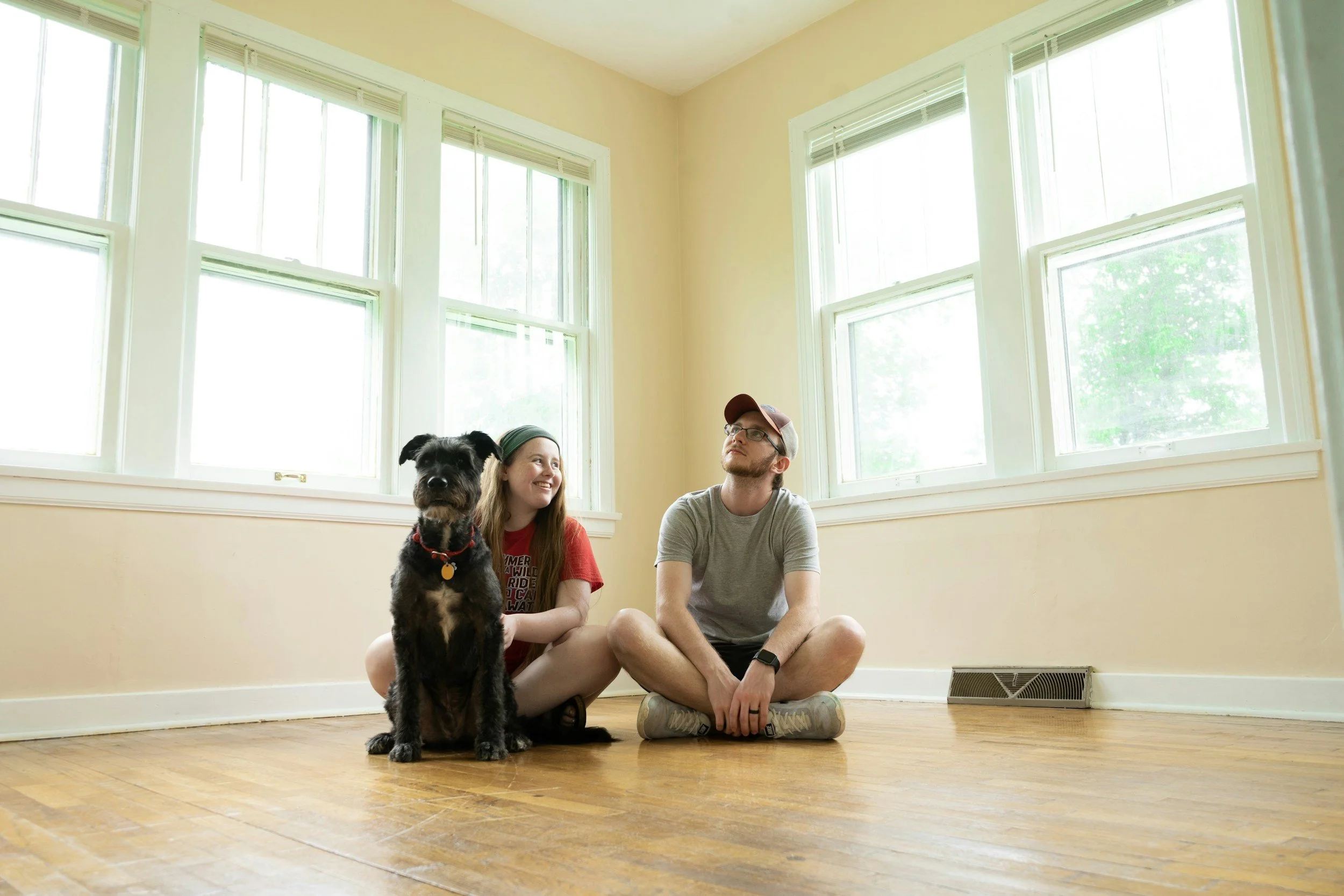
Buying your first home?
Purchase your first home with confidence.
Important stuff:
Please note that the views and opinions expressed in this post are general information only, and this is not financial advice.
Any advice and information is provided by Buyvest Pty Ltd is general in nature, for educational purposes only and is not intended to constitute specialist or personal advice. This website has been prepared without considering your objectives, financial situation or needs. Therefore, consider the appropriateness of the advice for your situation and needs before taking any action. It should not be relied upon to enter into any legal or financial commitments. Specific investment advice should be obtained from a suitably qualified professional before adopting any investment strategy. If any financial product has been mentioned, you should obtain and read a copy of the relevant Product Disclosure Statement and consider the information contained within that Statement concerning your circumstances before deciding whether to acquire the product. You can obtain a copy of the PDS by emailing hello@buyvest.com.au. If you want to change your financial circumstances, such as applying for a loan, all loan applications are subject to credit approval.
All information on this website is subject to change without notice.